Nothing beats a smooth, beautiful and youthful skin, coupled with an eye catching smile. In the quest for smoother and more youthful skin, one treatment has stood the test of time. This is Chemical Peel. Despite their slightly intimidating name, chemical peels are safe, effective, and widely used in dermatology clinics across the world. Here in Nairobi, various clinics have also adapted this treatment to deliver life-changing results to their patients. Among these is Este Medical Kenya, pioneering innovative and effective procedures for all.
Despite the effectiveness and usefulness of the procedure, many people hesitate, often because they are unsure of what the treatment actually involves. Is it painful? How long does recovery take? What kind of results can you expect? In this guide, we will explain chemical peels in detail, covering the different types, the recovery process, and the outcomes you can look forward to.
What are Chemical Peels?
A chemical peel is a skin treatment that uses a specially formulated chemical solution to exfoliate the outer layers of the skin. By removing these damaged or aged skin cells, the treatment stimulates cell renewal and reveals fresh, healthier skin underneath. The depth of exfoliation depends on the type of peel used. Some peels target only the very top layer of skin, while others penetrate more deeply to correct advanced skin concerns.
The skin naturally sheds cells on its own, but factors such as ageing, sun exposure, and certain conditions can slow this process. This usually leaves the skin looking dull and uneven. Chemical peels accelerate cell turnover, improve collagen production, and resurface the skin.
Common ingredients in peels include:
- Alpha-hydroxy acids (AHAs) – These include glycolic acid and lactic acid, which target mild concerns such as dullness and dryness.
- Beta-hydroxy acids (BHAs) - These are ideal for oily or acne-prone skin. They are usually made of salicylic acid.
- Trichloroacetic acid (TCA) – They are used in medium-depth peels for pigmentation and deeper wrinkles.
- Phenol – They are used in deep peels for severe sun damage and advanced signs of ageing.
Types of Chemical Peels
Chemical peels are classified based on how deeply they penetrate the skin:
- Superficial Peels
Superficial chemical peels are the gentlest option, targeting only the outermost layer of skin, known as the epidermis. They are commonly made with mild acids such as glycolic acid or lactic acid and are often recommended for individuals dealing with dull skin, uneven tone, mild acne, or the very first signs of ageing.
The procedure is quick, virtually painless, and requires little to no downtime. After a superficial peel, most people experience only mild redness or flaking that clears within a few days, making it easy to resume normal activities almost immediately. Because the effects are subtle, dermatologists usually recommend a series of treatments carried out every few weeks to achieve noticeable and long-lasting improvement.
- Medium Peels
Medium-depth chemical peels penetrate deeper, reaching both the epidermis and the upper layers of the dermis. They often use stronger agents like trichloroacetic acid (TCA) to address more visible concerns such as moderate wrinkles, acne scars, sun damage, and stubborn pigmentation. Recovery from a medium peel is more involved than a superficial one.
Patients typically experience redness, peeling, and sometimes swelling for about five to seven days. However, the results are more dramatic, and many people see a significant improvement in skin clarity and smoothness after just a few sessions. These peels are often recommended for patients who want more than a light refresh but do not require the intensity of a deep peel.
- Deep Peels
Deep chemical peels are the most intensive and transformative option. They use strong solutions such as phenol to penetrate into the lower layers of the dermis, making them effective for severe sun damage, deep wrinkles, or pronounced scarring. Unlike lighter peels, a deep peel is usually performed only once because its results are long-lasting and can dramatically improve the skin’s texture and tone. However, the trade-off for this is a much longer recovery time.
Patients can expect significant redness, swelling, and peeling that may last several weeks. Strict aftercare and sun protection are essential during recovery. Because of their intensity, deep peels are typically recommended only for those with serious skin concerns and are carried out under close medical supervision in specialised clinics.
Who is a good candidate?
Chemical peels are suitable for both men and women, but they are not recommended for everyone. You may be a good candidate if you have:
- Uneven skin tone or hyperpigmentation
- Fine lines or mild to moderate wrinkles
- Acne or acne scars
- Sun-damaged skin
- Enlarged pores or dull complexion
However, people with very sensitive skin, active infections, eczema, or those prone to abnormal scarring should avoid chemical peels unless cleared by a dermatologist.
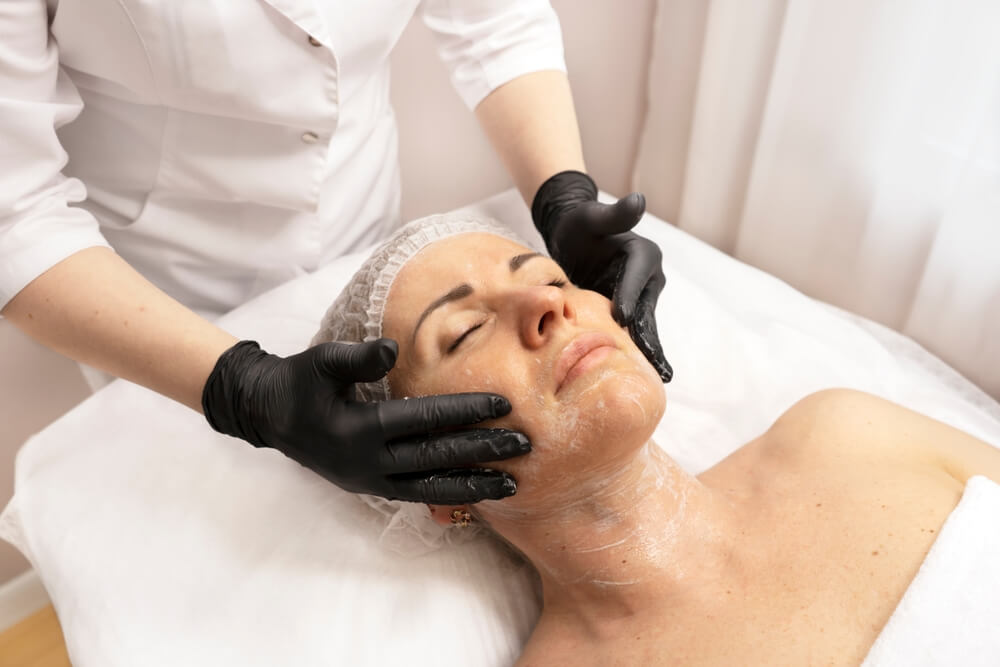
What to expect during the procedure
A chemical peel is usually performed in a dermatology clinic and takes less than an hour. Here’s what the process looks like:
- Consultation: Before the treatment itself, you will meet with a dermatologist who will carefully assess your skin. This consultation is crucial because not all pigmentation, acne scars, or wrinkles are the same, and the doctor must determine whether a superficial, medium, or deep peel is most appropriate. The dermatologist will also ask about your medical history, including any allergies, previous skin conditions, or medications you may be taking. Sometimes, patients are advised to prepare their skin with special creams or sunscreen for a few weeks before the peel to optimise results and reduce the risk of complications.
- Preparation: Preparation on the day of the procedure involves cleansing the skin thoroughly to remove dirt, oil, and any traces of makeup. The dermatologist may apply a pre-peel solution to balance the skin’s pH levels and ensure the peeling agent works evenly. In cases of medium or deep peels, a mild sedative or pain relief may be offered, and sensitive areas like the eyes and lips are carefully protected. This step sets the stage for the peel itself and helps maximise both safety and effectiveness.
- Application: The application of the peel solution is the core of the treatment. Using either a brush, cotton pad, or applicator, the dermatologist applies the chosen chemical solution evenly across the treatment area. At this stage, patients often report a tingling, warm, or slightly stinging sensation. The intensity of these sensations depends on the depth of the peel—superficial peels cause only mild discomfort, while deeper peels can feel more intense. The solution is left on the skin for a specific period, ranging from a few minutes to longer sessions, depending on the type of peel and the goals of treatment.
- Neutralisation: Neutralisation or removal follows once the chemical solution has done its work. With some peels, such as glycolic acid peels, the dermatologist will neutralise the solution using a special agent or by rinsing the skin thoroughly with water. Others, such as certain TCA peels, are self-neutralising, meaning they stop working on their own after a set time. Once neutralised, soothing creams or cooling compresses may be applied to calm the skin and reduce any lingering discomfort.
- Aftercare: Before leaving the clinic, patients are given clear instructions on how to care for their skin in the coming days. This usually includes avoiding direct sun exposure, applying high SPF sunscreen daily, and keeping the skin moisturised with gentle, non-irritating products. For medium and deep peels, you may also be prescribed topical ointments or mild pain relief to ease recovery. Proper aftercare is essential because the skin is temporarily more sensitive, and following the dermatologist’s instructions ensures the best possible results while reducing the risk of side effects..
Recovery and aftercare
The recovery process depends on the type of peel:
- Superficial peel - Mild redness or flaking for 1–3 days. Normal activities can continue immediately.
- Medium peel - Redness and noticeable peeling for up to a week. Avoid direct sunlight and use gentle skincare.
- Deep peel - Requires the most downtime. Expect redness, crusting, and swelling for 2–3 weeks. Strict aftercare is essential, and sun protection is critical for several months.
What to expect from the treatment?
The results of chemical peels are both immediate and progressive:
- After a superficial peel - Your skin looks brighter and feels smoother within days.
- After a medium peel - Pigmentation fades, wrinkles soften, and overall skin clarity improves within a week or two.
- After a deep peel - Dramatic results with smoother, firmer, and more youthful skin that can last for years.
It’s important to remember that while chemical peels deliver excellent results, they cannot stop the natural ageing process. Maintenance treatments and proper skincare are key to long-lasting benefits.
Possible risks and side effects
When performed by a qualified dermatologist, chemical peels are generally safe. However, potential side effects include:
- Temporary redness, swelling, or sensitivity
- Increased risk of sunburn if proper protection is not used
- Hyperpigmentation or hypopigmentation in darker skin tones (rare if handled by experts)
- Infection or scarring (extremely rare with professional care)
How much do chemical peels cost in Nairobi?
The cost of chemical peels varies depending on the type, the clinic, and the number of sessions required:
- Superficial peel - Ksh 5,000 – 10,000 per session
- Medium peel - Ksh 12,000 – 25,000 per session
- Deep peel - Ksh 40,000 – 70,000 per session
Most patients benefit from a series of superficial or medium peels, while deep peels are a one-time investment. Many clinics in Nairobi offer treatment packages, which are more cost-effective in the long run.
Our Take
Chemical peels are one of the most versatile and effective dermatological treatments available. They’re efficient in battling acne scars and sun damage, as well as fine lines and wrinkles. Moreover, they have proven to be effective in refreshing the skin's glow and enhancing a youthful look and appearance. Chemical peels can not stop the ageing process, but they do help in making sure you look young and beautiful as ever.
If you want that smooth and youthful skin, then a chemical peel is the right thing for you, and Este Medical Kenya is the place for you. At Este Medical Kenya, we have expert dermatologists, all trained and experienced in dermatology procedures. We shall help curate the perfect treatment plan for you, delivering that look you desire. Visit us at The Piano Building, along Brookside Drive in Westlands, Nairobi. You can also contact us for enquiries and book your appointment with us today.